Understanding Kuala Lumpur’s Public Healthcare System
The public healthcare system in Kuala Lumpur operates through two distinct governing bodies: tertiary referral hospitals under the Ministry of Health (KKM) and university teaching hospitals under the Ministry of Higher Education (KPT). These facilities deliver comprehensive inpatient, outpatient, and surgical care across subspecialised clinical disciplines. Accessing non-emergency specialist care within this framework requires adherence to established referral protocols and clinical triage guidelines.
To consult a specialist at a public hospital, patients must first obtain an official referral letter (Surat Rujukan). This journey typically begins at a primary healthcare clinic, known locally as a Klinik Kesihatan, or through a private general practitioner (GP). Medical officers evaluate the patient’s condition and issue a formal transfer note to the appropriate hospital department. Direct walk-ins to public specialist outpatient clinics are not accepted without this documentation.
For acute medical crises, patients enter through the hospital’s Emergency and Trauma Department (ETD). Emergency units operate under a colour-coded clinical triage protocol to prioritise care based on immediate clinical urgency:
- Red Zone (Critical): Immediate resuscitation for life-threatening emergencies such as cardiac arrest, severe trauma, or acute respiratory failure, treated with zero administrative delay.
- Yellow Zone (Semi-Critical): Urgent medical conditions requiring prompt clinical intervention, including moderate asthma exacerbations, high fevers with altered consciousness, or closed fractures.
- Green Zone (Non-Critical): Mild, stable ailments that do not threaten life or limb, such as minor sprains, mild lacerations, or routine illnesses.
When seeking government healthcare in the capital, patients should note the geographical boundaries of the Federal Territory of Kuala Lumpur. While neighbouring facilities in Selangor—such as Hospital Selayang, Hospital Serdang, Hospital Ampang, and Hospital Sungai Buloh—serve the wider Klang Valley, they operate under Selangor state administration. This directory focuses strictly on public institutions physically located within Kuala Lumpur.
Directory of Public Hospitals in Kuala Lumpur
Kuala Lumpur houses a concentrated network of tertiary referral centres and teaching institutions equipped with advanced surgical suites, intensive care units, and specialized subspecialty clinics. These public hospitals serve residents across the Federal Territory and accept complex patient transfers from across Malaysia. Convenient public transit links, particularly the MRT Putrajaya Line, provide direct access to key medical clusters.
1. Hospital Kuala Lumpur (HKL)
Established in 1870, Hospital Kuala Lumpur is Malaysia’s flagship public tertiary hospital and the primary referral centre under the Ministry of Health. Spanning 150 acres near Titiwangsa, it is one of the largest medical complexes in Asia, housing over 2,300 inpatient beds, more than 100 specialized wards, and extensive intensive care infrastructure. High-volume outpatient consultations, diagnostics, and day procedures are managed within its dedicated Specialist Complex & Ambulatory Care Centre (SCACC). The hospital is directly accessible via the Hospital Kuala Lumpur MRT station on the Putrajaya Line (PY18).
- Key Specialties:
- General Internal Medicine, Nephrology, and Urology
- General Surgery, Orthopaedics, and Traumatology
- Neurology and Neurosurgery (Institut Kaji Saraf Tun Abdul Rahman)
- Clinical Oncology, Radiotherapy, and Nuclear Medicine
- Emergency Medicine, Trauma Care, and Critical Care Anaesthesiology
- Address & Phone Number:
- Address: Jalan Pahang, 50586 Kuala Lumpur, Wilayah Persekutuan Kuala Lumpur
- Phone Number: 03-2615 5555
2. Hospital Tunku Azizah (HTA)
Hospital Tunku Azizah operates as an autonomous national referral hospital for maternal, neonatal, and paediatric healthcare within the Hospital Kuala Lumpur cluster. Designed as a specialised tertiary women and children’s facility, HTA features 600 beds, advanced paediatric operating theatres, and family-centred wards. It functions as the primary national centre for rare paediatric conditions, high-risk pregnancies, and complex congenital disorders.
- Key Specialties:
- General and Subspecialty Paediatric Medicine
- Paediatric Surgery, Paediatric Orthopaedics, and Neuro-Hybrid Surgery
- Obstetrics and Gynaecology (Maternal-Fetal Medicine)
- Paediatric Intensive Care (PICU) and Neonatal Intensive Care (NICU)
- Paediatric Bone Marrow Transplantation and Paediatric Oncology
- Address & Phone Number:
- Address: Lot 25, Jalan Raja Muda Abdul Aziz, 50300 Kuala Lumpur, Wilayah Persekutuan Kuala Lumpur
- Phone Number: 03-2600 3000
3. Hospital Rehabilitasi Cheras (HRC)
Opened in 2012, Hospital Rehabilitasi Cheras is Southeast Asia’s first purpose-built comprehensive government rehabilitation hospital under the Ministry of Health. Situated in Bandar Tun Razak, HRC focuses on restoring physical mobility, neurological function, and independent living capabilities for patients recovering from major illnesses, strokes, or trauma. The medical centre features therapeutic gymnasiums, hydrotherapy pools, and dedicated wards for comprehensive inpatient therapy.
- Key Specialties:
- Neurological Rehabilitation (Stroke and Acquired Brain Injury)
- Spinal Cord Injury Rehabilitation
- Paediatric Physical and Cognitive Rehabilitation
- Amputee Care, Prosthetics, and Orthotics Fitting
- Robotic-Assisted Mobility Training and Hydrotherapy
- Integrated Traditional and Complementary Medicine (T&CM)
- Address & Phone Number:
- Address: Jalan Yaacob Latif, Bandar Tun Razak, 56000 Cheras, Wilayah Persekutuan Kuala Lumpur
- Phone Number: 03-9145 3400
4. Universiti Malaya Medical Centre (UMMC / PPUM)
Universiti Malaya Medical Centre, established by statute in 1962, is Malaysia’s oldest university teaching hospital and operates under the Ministry of Higher Education. Located along Jalan Profesor Diraja Ungku Aziz in Lembah Pantai, UMMC serves as the primary teaching facility for the Universiti Malaya Faculty of Medicine. Because UMMC is an autonomous statutory university hospital rather than an MOH institution, it follows an independent fee structure with partially subsidized rates for the public.
- Key Specialties:
- Interventional Cardiology and Cardiothoracic Surgery
- Complex Surgical and Clinical Oncology
- Orthopaedic Surgery, Joint Reconstruction, and Traumatology
- Organ Transplantation (Renal and Hepatic Transplants)
- Emergency Medicine, Critical Care, and Primary Care Family Medicine
- Address & Phone Number:
- Address: Jalan Profesor Diraja Ungku Aziz, 59100 Kuala Lumpur, Wilayah Persekutuan Kuala Lumpur
- Phone Number: 03-7949 4422
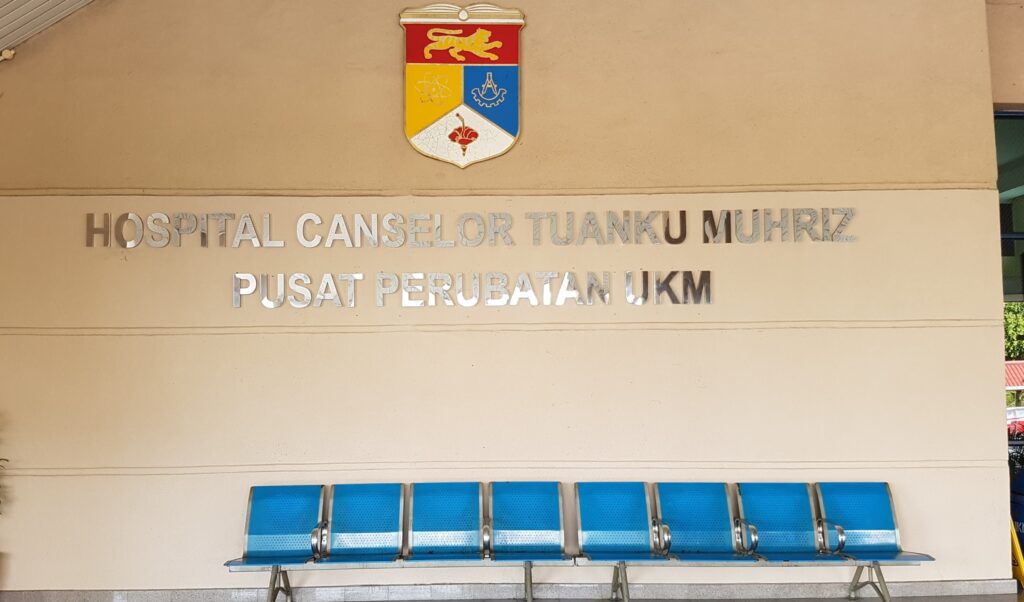
5. Hospital Canselor Tuanku Muhriz UKM (HCTM)
Located in Bandar Tun Razak, Cheras, Hospital Canselor Tuanku Muhriz (formerly known as HUKM) is the premier teaching hospital for Universiti Kebangsaan Malaysia. Administered under the Ministry of Higher Education, HCTM integrates academic clinical research, undergraduate and postgraduate medical education, and specialized patient care. Alongside its public subsidized services, the hospital houses the UKM Specialist Centre (UKMSC) on its upper levels, operating as a distinct private executive wing.
- Key Specialties:
- Minimally Invasive Surgery and Advanced Endoscopy
- Adult and Paediatric Haematology and Oncology
- Nephrology, Renal Replacement, and Dialysis Care
- Maternal-Fetal Medicine and Advanced Reproductive Endocrinology
- Orthopaedics, Fracture Liaison Services, and Clinical Genetics
- Address & Phone Number:
- Address: Jalan Yaacob Latif, Bandar Tun Razak, 56000 Cheras, Wilayah Persekutuan Kuala Lumpur
- Phone Number: 03-9145 5555
Public Hospital Fee Schedule for Malaysian Citizens
Malaysian citizens benefit from heavily subsidised medical fees at public hospitals under the Fees Act 1951, paying nominal rates for consultations, diagnostic tests, and standard inpatient admissions. Government subsidies cover up to 98% of overall medical operational costs in public health facilities, making tertiary medical services universally accessible.
- Outpatient Clinic Consultation: RM1 covers registration, doctor evaluation, standard diagnostic investigations, and basic generic medications at general outpatient clinics.
- Specialist Outpatient Clinic: RM5 per visit for consultation and treatment when presenting an official referral letter from a Klinik Kesihatan or government medical officer. Initial visits referred by private clinics may incur a RM30 registration fee before reverting to RM5 for subsequent follow-ups.
- Emergency and Trauma Department (ETD): RM1 to RM5 depending on assigned triage priority. Patients categorized under the Red Zone receive immediate resuscitation and urgent stabilization free of initial financial barriers.
- Inpatient Ward Charges:
- Class 3 Ward: RM3 per day for room and board, with an initial admission deposit of RM20. Routine surgical procedures, nursing care, and standard inpatient medications are heavily subsidised or provided at minimal nominal rates.
- Class 2 Ward: RM60 to RM90 per day for room and board.
- Class 1 Ward: RM80 to RM120+ per day depending on single- or double-bed room configurations, requiring an upfront deposit ranging from RM700 to RM800.
Under official Ministry of Health regulations, complete 100% fee exemptions on consultation, outpatient medication, and Class 3 inpatient services apply to the following eligible citizen groups:
- Senior citizens aged 60 years and above
- Children aged 12 years and below
- Registered persons with disabilities holding an official OKU card issued by the Department of Social Welfare (JKM)
- Primary and secondary students from government and government-aided schools
- Active Malaysian civil servants, government pensioners, and their recognized dependents presenting a valid Guarantee Letter (GL)
Medical Treatment Charges and Inpatient Deposits for Non-Citizens
Non-citizens seeking medical attention at Malaysian public hospitals are billed at unsubsidised standard rates in accordance with the Fees (Medical) (Amendment) Order 2017. These gazetted schedules require foreign nationals to settle upfront registration fees and mandatory inpatient cash deposits prior to non-emergency hospital admission.
Foreign patients pay RM40 for general outpatient registration and RM120 for specialist clinic consultations. Attendance at an emergency department carries a flat charge of RM100 for triage and medical examination. Laboratory diagnostics, advanced radiological imaging (such as CT and MRI scans), surgical consumables, and medications are billed separately at full government cost-recovery prices.
Before admission to an inpatient ward, non-citizens must pay mandatory deposits based on their clinical condition:
- Medical Admission Deposit: RM1,400 for Class 3 inpatient medical care.
- Surgical Admission Deposit: RM2,800 for procedures requiring surgical theatre intervention.
- Obstetric Delivery Deposit: RM3,000 or more for normal and operative childbirth.
- Daily Class 3 Ward Accommodation: RM160 per day, excluding daily doctor rounds, tests, and nursing procedures.
| Service Category |
Malaysian Citizens |
Non-Citizens (Foreign Nationals) |
| General Outpatient Clinic |
RM1 |
RM40 |
| Specialist Outpatient Clinic |
RM5 (with government referral) |
RM120 |
| Emergency Department (A&E) |
RM1 – RM5 (Red Zone prioritized) |
RM100 |
| Class 3 Daily Ward Accommodation |
RM3 |
RM160 |
| Inpatient Admission Deposit (Medical) |
RM20 |
RM1,400 |
| Inpatient Admission Deposit (Surgical) |
RM20 – RM30 |
RM2,800 |
| Senior Citizens (60+) & OKU Cardholders |
100% Fee Exemption (Free) |
Standard Non-Citizen Rates |
Pros and Cons of Public Hospitals in Kuala Lumpur
Public hospitals in Kuala Lumpur combine premier clinical expertise and unmatched affordability with significant operational bottlenecks, including severe outpatient congestion and extended surgical waiting periods. Understanding these advantages and constraints helps patients evaluate when to rely on public healthcare and when private medical access may be required.
Advantages of Public Hospitals
- Exceptional Affordability: With outpatient visits at RM1 and specialist care at RM5, public healthcare provides comprehensive medical treatment with minimal out-of-pocket costs.
- Top-Tier Clinical Expertise: Public tertiary centres house many of Malaysia’s foremost medical professors, senior consultant surgeons, and multidisciplinary subspecialists.
- Comprehensive Critical Care Infrastructure: Large complexes like Hospital Kuala Lumpur maintain high-volume intensive care units (ICU), specialized burn units, and advanced trauma resuscitation facilities equipped for extreme medical emergencies.
- Subsidized Chronic Disease Medication: Patients receiving long-term treatment for complex conditions—such as renal failure, oncology, or cardiovascular disease—receive subsidized medications through hospital outpatient pharmacies.
Drawbacks and Bottlenecks
- Severe Waiting Times: Specialist outpatient clinics routinely experience heavy daily congestion. On scheduled appointment days, patients frequently spend between 3 and 6 hours completing registration, triage, doctor consultations, and pharmacy collection.
- Extended Elective Surgical Queues: Non-emergency operations—such as joint replacements, hernia repairs, or cataract extractions—frequently have waitlists extending from three months to over nine months due to theatre capacity limitations.
- Diagnostic Imaging Backlogs: Elective MRI and CT scan appointments often face delays of several months unless prioritized for urgent oncology or acute neurological evaluations.
- Open Ward Environments: Class 3 wards consist of large, multi-bedded open rooms with shared bathroom facilities and strict visiting hours, offering limited personal privacy for recovering patients.
The Role of Private Health Insurance
Given the operational demands placed on public healthcare facilities in Kuala Lumpur, maintaining private medical insurance provides a practical financial safety net. Comprehensive private medical coverage grants immediate cashless admission to private medical centres across the Klang Valley, enabling individuals to schedule elective operations, secure private single rooms, and undergo advanced diagnostic imaging without prolonged queues. At the same time, Malaysia’s robust public hospital network remains accessible as a highly capable secondary option for long-term specialized care.
Frequently Asked Questions
Can I visit a specialist clinic at Hospital Kuala Lumpur (HKL) without a referral letter?
No, public hospital specialist clinics in Kuala Lumpur do not accept direct walk-ins without an official referral letter. Patients must first obtain a referral from a public health clinic (Klinik Kesihatan), a registered private general practitioner (GP), or through an emergency department triage evaluation before booking a specialist appointment.
How much do Malaysian citizens pay for emergency room (A&E) treatment at KL public hospitals?
Malaysian citizens pay between RM1 and RM5 for emergency room services at public hospitals. This nominal fee covers initial clinical triage, medical officer consultation, urgent basic investigations, and acute medications. Critical patients requiring resuscitation in the Red Zone are attended to immediately without upfront payment barriers.
Are university hospitals like PPUM (UMMC) and HCTM subject to the MOH RM1 and RM5 fee structure?
No, university teaching hospitals operate under the Ministry of Higher Education (MOHE) rather than the Ministry of Health (MOH). They maintain independent statutory fee schedules that are partially subsidized by the federal government but higher than the standard MOH RM1 or RM5 rates, unless covered by civil service arrangements.
How long are the typical waiting times for consultations and elective surgeries in KL public hospitals?
Specialist clinic appointments typically involve on-site waiting times of 2 to 5 hours on clinic days due to high patient volumes. For non-emergency elective surgeries and advanced imaging like MRI scans, waiting lists commonly range from a few weeks to more than six months depending on clinical urgency and department capacity.
What documents must I bring when seeking treatment at a public hospital in Kuala Lumpur?
Patients should bring their original Malaysian identity card (MyKad or MyKid) or a valid international passport for foreign nationals. You must also present your official medical referral letter, existing prescription medication packages, previous imaging or laboratory results, and an employer Guarantee Letter (GL) or pensioner card if applicable.
This article is for reference only; the actual coverage terms are subject to the policy.
This article is for reference only and is not medical advice. Please consult a registered doctor if you have any concerns.
Sources
- calculatormalaysia.com
- tanyasahaja.com
- mrt.com.my
- klia2.info
- hospital.com.my
- moh.gov.my
- myhospitalnow.com
- ummc.edu.my
- um.edu.my
- um.edu.my
- um.edu.my
- um.edu.my
- um.edu.my
- um.edu.my